
A successful restructuring outcome for another business tells you very little about whether restructuring is the right decision for yours.
That is an important distinction for directors considering the findings of ASIC’s recent small business restructuring review. Public reports can provide valuable insight into how businesses have managed financial difficulty, but they cannot account for the commercial realities of an individual company. When creditor pressure, outstanding liabilities and uncertainty about future trading are influencing decisions, the priority should be understanding what the evidence means for your own position, rather than assuming that outcomes reported elsewhere can be repeated.
What ASIC’s Review Actually Covers
ASIC’s Review of Small Business Restructuring Process 2021–26, published as Report 847 (REP 847), examines how the formal restructuring process operated between January 2021 and June 2026. Small business restructuring allows eligible companies experiencing financial difficulty to propose arrangements with creditors while directors retain responsibility for day-to-day operations, subject to the framework’s requirements. The report considers restructuring appointments, the progression of proposals and recorded outcomes across the companies examined. It provides a broader understanding of how the framework has operated, rather than an assessment of businesses currently considering their options.
What the Findings Can Tell Directors
An important theme in ASIC’s review is the role creditors play in whether restructuring proposals progress. The report discusses changes in the proportion of appointments progressing to a plan appointment, alongside creditor participation and tax-related liabilities. These observations matter because restructuring involves more than identifying debts a company cannot immediately repay. Directors also need to consider whether the underlying business can continue operating, meet future commitments and support a credible proposal. The report offers context for that discussion, although its aggregate findings cannot predict how creditors would respond to an individual company.
Consider the difference between a company experiencing a temporary interruption in customer payments and one whose operating margins have been insufficient for an extended period. Both may be under financial pressure, but the commercial issues requiring attention are not necessarily the same. Expected receipts, ongoing expenses, creditor arrangements and future trading prospects can all affect the options worth examining. Our earlier article on small business restructuring explains the formal process in more detail. ASIC’s review adds perspective on how that process has operated across a wider group of companies.
What the Review Cannot Decide for Your Company
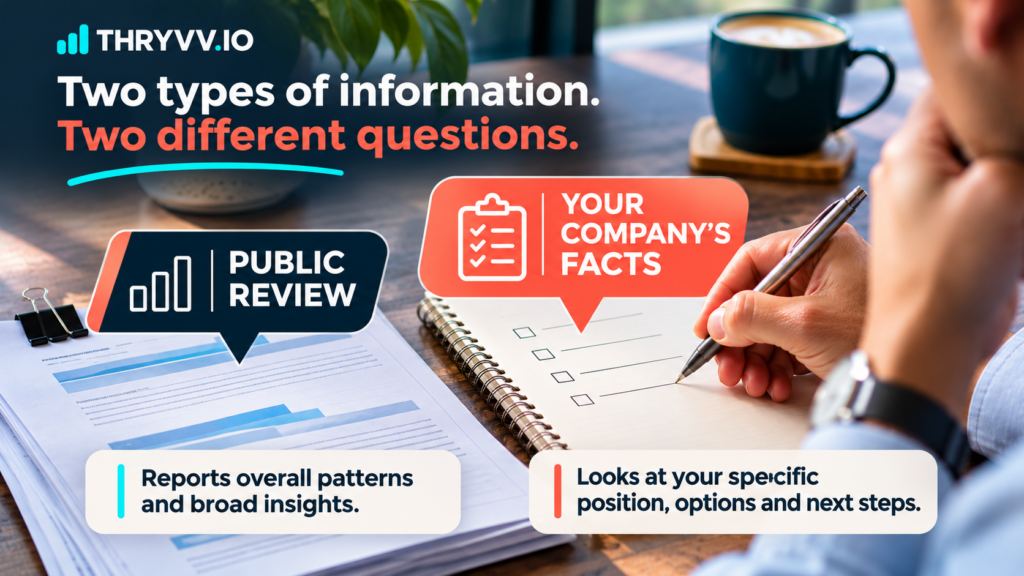
A public review cannot determine whether a particular company satisfies restructuring eligibility requirements, whether its financial position is sustainable or whether a proposed arrangement would be appropriate. Those matters depend on the company’s records, obligations, trading performance and current circumstances. Even businesses with similar outstanding liabilities may have different prospects because their cash flow, customer relationships and future commitments differ. Treating a reported outcome as evidence that the same result is available to your company risks overlooking the information that should guide the decision.
Establishing the Information That Matters
Before considering a formal pathway, directors benefit from understanding the financial position they are working with. That includes available cash, expected receipts, overdue liabilities, tax lodgements, employee entitlements and commitments falling due. The reliability of the records matters as much as the figures themselves. Incomplete accounts may obscure whether a shortage is temporary or reflects a more persistent problem with pricing, costs or profitability. Correspondence from creditors and the timing of upcoming obligations may also affect which questions require attention first.
This is where commercial assessment becomes more useful than comparison with published outcomes. A company may expect significant income in coming months but still face immediate obligations it cannot meet. Another may have enough cash for the short term while continuing to trade at a loss. Neither position can be understood from an industry-level report alone. Through Thryvv’s Recover services, the focus is on clarifying the pressures affecting the business and considering available pathways with appropriate professional advice, rather than assuming a particular process should be pursued.

Using the Review in Your Next Conversation
ASIC’s report and accompanying media release provide useful starting points for understanding the evidence behind public discussion of restructuring. Read the findings with attention to what was measured, which companies were included and the limitations of drawing conclusions from aggregate outcomes. Then consider which questions remain unanswered about your own business. Those questions may concern financial records, creditor expectations, future trading capacity or the implications of formal notices. A qualified adviser can help examine those matters in the context of the company’s actual position.
ASIC’s review can inform your thinking, but it cannot make the decision for your business.
If financial pressure is affecting your ability to meet obligations or plan the next stage of the company, the conversation needs to begin with your circumstances, not another company’s outcome. Contact Thryvv to arrange a confidential discussion about your company’s position and the options that may warrant further assessment.
Need a clear next step?
If this sounds close to what is happening in your business, start with a confidential conversation. We’ll help you work out what matters first.
or call 07 2143 6020
Free. Confidential. No obligation.