
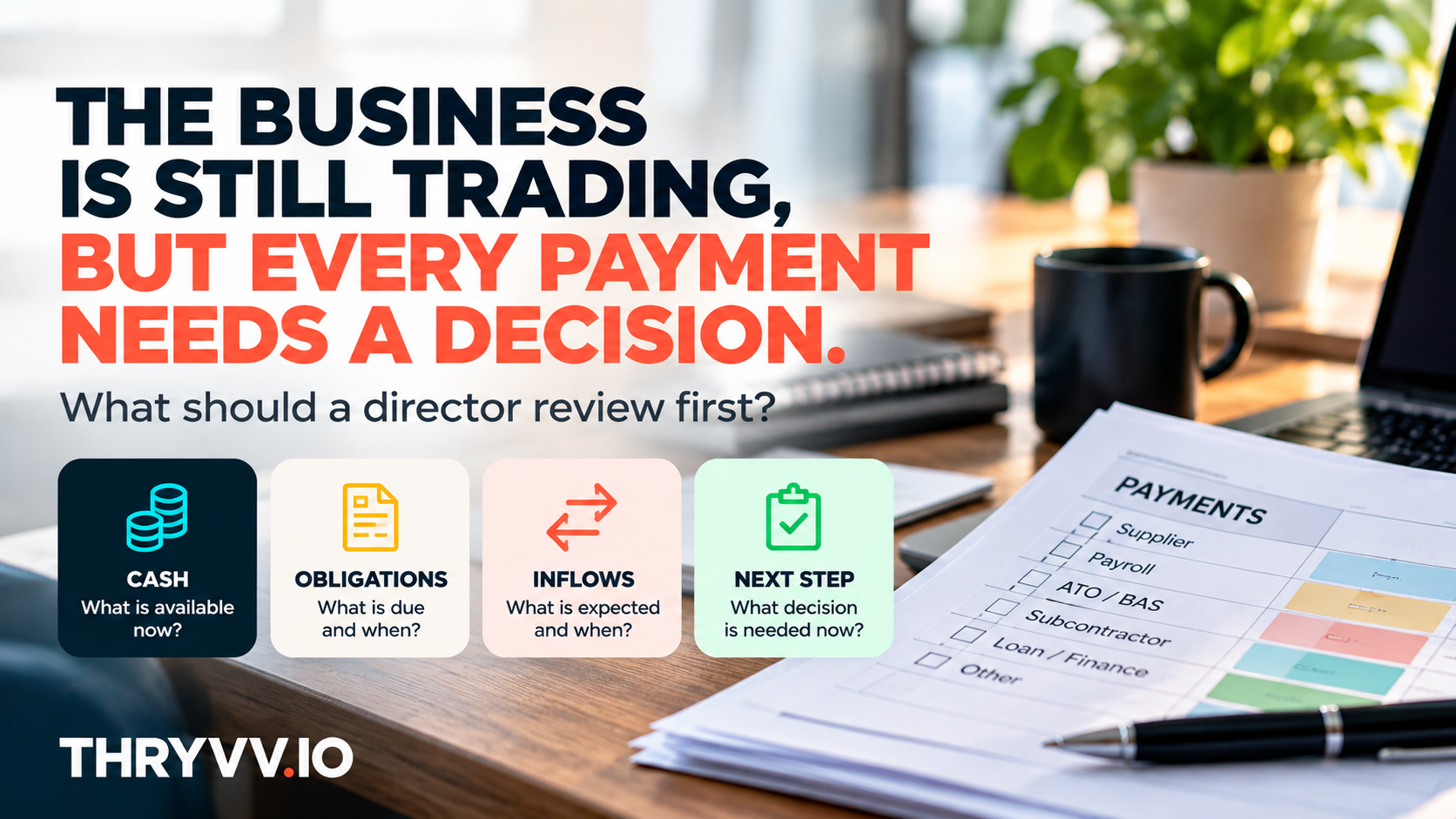
Small business cash flow problems can become particularly difficult when a company is still trading but every upcoming payment requires a separate decision. Directors may have customers, ongoing work and expected receipts, yet remain uncertain whether enough cash will be available to meet obligations as they fall due.
A payment may be manageable today, but the decision also depends on what is due tomorrow and how reliable expected receipts are. Before making another commitment, directors need a clearer picture of the business’s immediate financial position.
When Every Payment Becomes a Decision
Cash flow pressure does not necessarily mean business activity has stopped. A company may be generating revenue while struggling to meet wages, supplier invoices, tax liabilities and operating expenses. The difficulty becomes more pronounced when several commitments fall due before expected customer payments arrive.
As discussed in our earlier article, Why a Profitable Business Can Still Struggle to Pay Its Bills, profit does not automatically mean cash is available when payments fall due. Understanding that difference is important, but directors also need to examine their immediate obligations.
Rather than reviewing each payment separately, the starting point is to understand how available cash, expected receipts and upcoming commitments fit together. This helps establish whether the business is facing a short-term timing problem or signs of more persistent financial difficulty.
Four Areas Directors Should Review First
A bank balance alone cannot explain the business’s financial position. Some funds may already be needed for scheduled payments, while expected customer receipts may not arrive when anticipated.
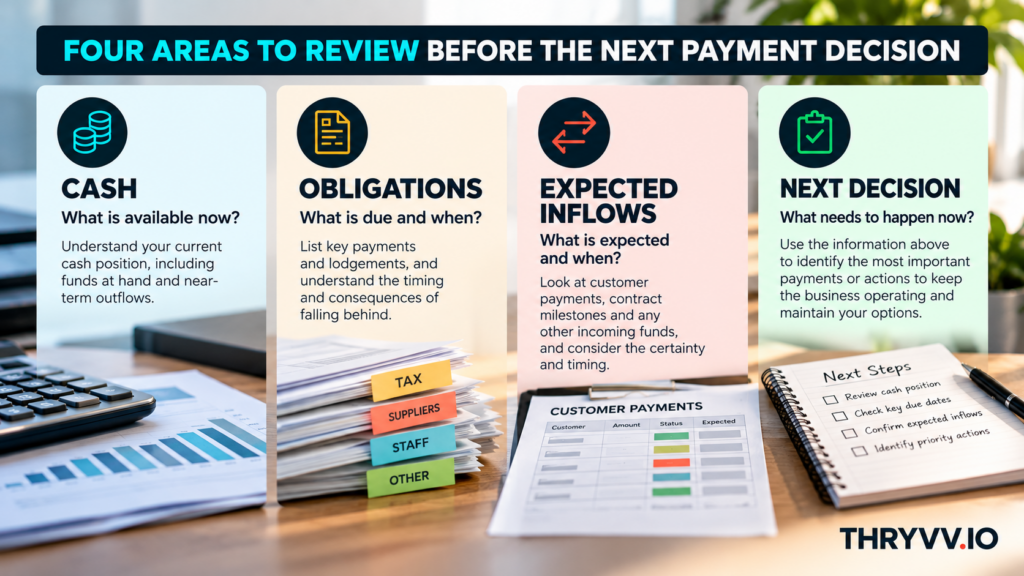
For practical cash flow management, directors can begin with four connected areas:
| Area | What to review |
|---|---|
| Available cash | Funds accessible now, including scheduled transactions and restrictions |
| Upcoming obligations | Wages, suppliers, tax, superannuation and other commitments |
| Expected inflows | Customer receipts, expected dates and payment certainty |
| Missing information | Figures or documents that could change the assessment |
This review helps identify where information is reliable and where assumptions remain uncertain. It is not a universal guide to which creditors should be paid first. Different obligations can carry different consequences, and payment decisions must reflect the company’s circumstances.
Directors should also distinguish between amounts already overdue and commitments approaching their due dates. That distinction can help explain how much pressure has accumulated and what requires further investigation. Where the business may be unable to pay debts when due, professional advice should not be delayed.
Build a Short-Term Cash Flow Forecast
A short-term cash flow forecast brings these figures together across the coming days or weeks. It compares expected available cash with payments falling due and helps identify periods when funds may be insufficient.
The forecast should reflect realistic payment dates rather than relying entirely on invoice due dates. It also needs regular updating as customers pay, expenses change or new information becomes available.
What Should Directors Check?
A useful forecast should distinguish between confirmed information and expectations:
- Confirmed receipts: Amounts and arrival dates supported by reliable information.
- Uncertain inflows: Payments that may arrive late or differ from expectations.
- Upcoming commitments: Known amounts and their due dates.
- Potential shortfalls: Periods when expected cash may not cover obligations.
This matters because a forecast built around optimistic assumptions can provide misleading reassurance. If a significant receipt is delayed, the director needs to understand how that change affects the wider payment position.
Our earlier article on working capital pressure explains how the timing of money moving through a trading business can affect its financial position. A short-term forecast extends that review by showing what may happen next.
Which Missing Information Could Change the Decision?
Directors do not necessarily need perfectly organised accounts before beginning an initial review. They do, however, need to identify missing information that could materially affect their understanding.
An outstanding tax balance, an uncertain customer payment or an unrecorded commitment may change the assessment significantly. These gaps should be identified and investigated rather than replaced with assumptions.
The important question is whether obtaining a particular figure would change the director’s understanding of the immediate position. This helps focus attention on relevant records while recognising that incomplete information may itself be a serious concern.
Where business cash flow problems continue, the review should also consider whether the pressure reflects a temporary timing issue or a more persistent inability to meet obligations.
When Is Professional Advice Needed?
If a business repeatedly struggles to meet debts when due, relies on uncertain receipts to continue operating or cannot establish its immediate financial position, directors should seek timely professional advice.
The Australian Securities and Investments Commission (ASIC) explains directors’ responsibilities when a company may be insolvent, including obligations concerning insolvent trading. Directors must remain informed about their company’s financial position.
A Director’s Advocate can help organise the available information, clarify the pressures affecting the business and identify where specialist accounting, legal or insolvency advice is required. The appropriate response depends on the company’s actual circumstances.
A Clearer Picture Before the Next Decision
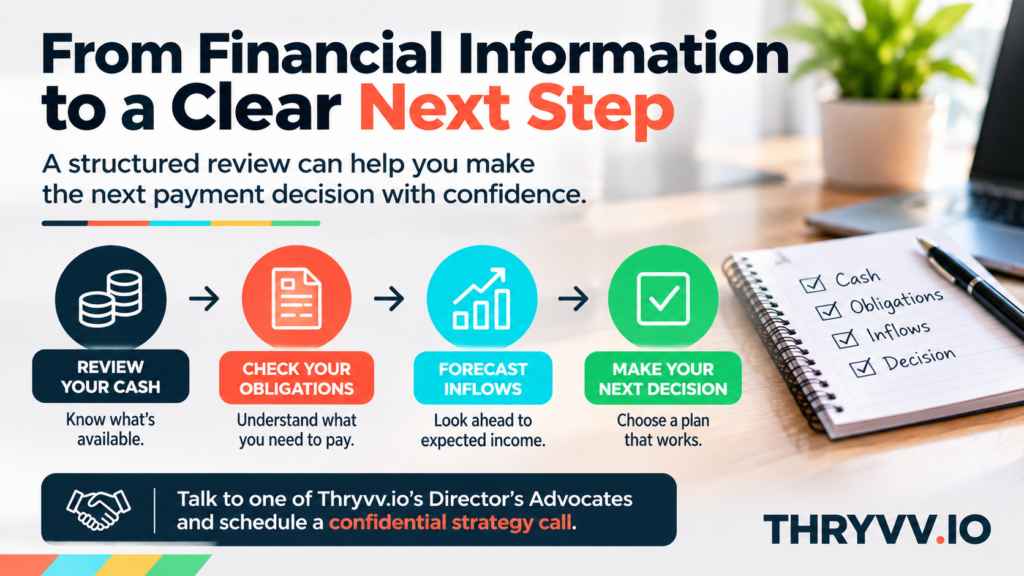
When every payment requires consideration, the priority is understanding what the business can meet, what remains uncertain and which issues require attention. A clearer financial picture supports more informed discussions, but it does not replace professional assessment where solvency or director responsibilities are in question.
Which upcoming obligation is making your next decision difficult?
Talk to one of Thryvv.io’s Director’s Advocates and schedule a confidential strategy call to discuss your position.
Need a clear next step?
If this sounds close to what is happening in your business, start with a confidential conversation. We’ll help you work out what matters first.
or call 07 2143 6020
Free. Confidential. No obligation.
Related support: Manage · What we do