

A creditor is asking for a date. The accounts might still be with the accountant, but you need to decide what to do next. What do you bring when the picture is incomplete?
Start with the decision, its timing and the information you have. You need not present a polished case for one outcome. Be clear about which figures are current, estimated or still missing.
Start with the decision you need help making
Before collecting every report, write down the question keeping you at your desk. Is a supplier asking for a commitment you cannot yet assess? Is a payment due before the next likely customer receipt? Are you considering a new order or funding while other obligations remain unclear?
Note when the decision is needed and who is already advising you. That gives the conversation a starting point: what needs attention now and what information could change the assessment. You are not expected to diagnose the company’s position in advance.
If a notice or letter carries a deadline, bring it and say when it arrived. Ask the appropriate professional to assess it promptly; do not guess at its significance.
Bring the cash and payment picture you have, not a perfect pack
These are conversation inputs, not a mandatory checklist: what money is available, what might come in and which commitments are pressing. Label rough figures as rough.
Available cash and likely near-term receipts
Bring the bank balance you can verify and a short view of expected receipts: what has been invoiced, what is overdue, and what is only a forecast. The distinction matters. A customer saying they intend to pay is not the same as cash in the account.
Note wages, rent or essential trading costs. You need not rebuild a detailed model here; Thryvv’s cash-flow article covers that review separately.
Debts, due dates and creditor contact
Make a simple list of what you know is owing, when payment is due and who has contacted the business. Include tax and superannuation obligations if relevant, and bring any ATO or creditor correspondence rather than paraphrasing a notice from memory. Mark disputed amounts or dates you cannot confirm.
This is not a payment order. It helps an adviser see where timing or a document changes the questions. ASIC’s guidance on financial difficulty recommends checking whether debts can be paid as they fall due, seeking independent advice early and recording key decisions.

Make the unknowns visible
An incomplete set of accounts is not a reason to pretend the numbers are settled. Bring what is available, then separate it into three plain descriptions: confirmed, estimated and missing. For example, you may know the bank balance but not whether all supplier invoices have been entered. Say so.
If your accountant is preparing reports, note what is outstanding. Ask which decisions depend on them and what can be discussed now. Read more on working with delayed financial records.
An early conversation can identify the gaps. It cannot turn unverified figures into reliable ones or replace legal, accounting or insolvency advice where that is needed.
Which questions should you ask before options are assessed?
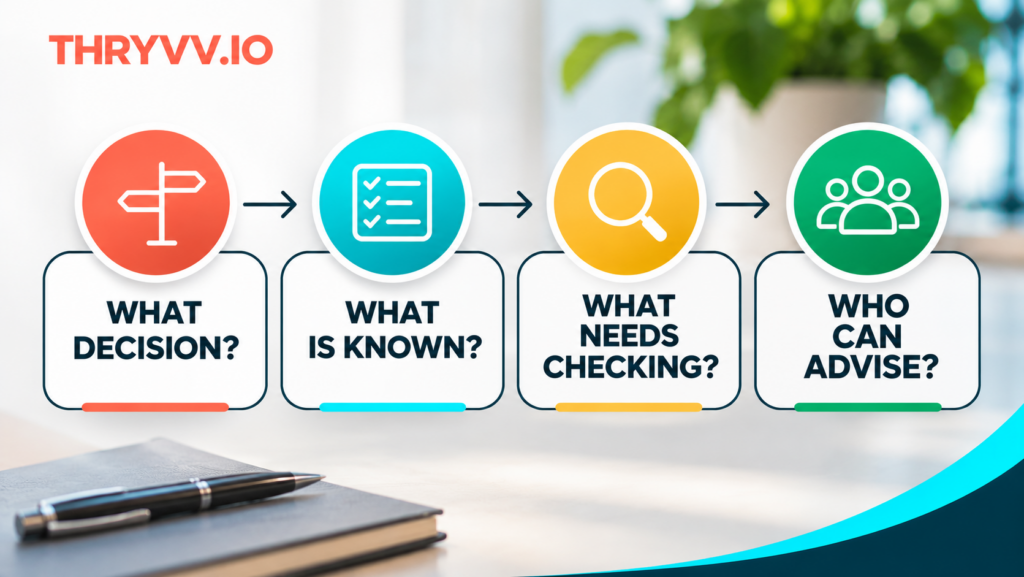
Take a few questions into the room, not a preferred answer you feel obliged to defend:
- What decision is time-sensitive, and what evidence would change our view?
- Which payment dates, notices or creditor contacts need specialist assessment?
- What figures are usable today, and what must the accountant verify?
- What commitments should we examine before making another promise?
- Who will gather the missing information, and when should we speak again?
Those questions help distinguish a genuine choice from a reaction to the loudest phone call. They can identify the next information task even when wider options cannot yet be compared.
What can happen after you have identified the next information gap?
Next, you may need to confirm a balance, review a letter or involve a specialist. Agree who will do what and which decision remains open; not every question will be resolved on the day.
Thryvv’s Recover service is designed to help directors understand pressure and consider practical options with the right advice. If you want to know more about Thryvv’s process, read what happens in a first meeting. This article is about what you can bring before that conversation: the decision, the dates and the unknowns.
What decision are you trying to make while creditors and cash flow are pressing? If you are unsure where to start, contact Thryvv for a confidential conversation. You can begin with the questions rather than a perfect pack.
Need a clear next step?
If this sounds close to what is happening in your business, start with a confidential conversation. We’ll help you work out what matters first.
or call 07 2143 6020
Free. Confidential. No obligation.