

You put your own money into the company to help it keep trading. Perhaps it covered operating expenses, supported payroll or bridged a period when customer payments were delayed. Now the business is under pressure, and you want to understand whether that money can be returned.
It is a reasonable question, particularly when your personal finances have already been affected.
The answer depends on more than how much you contributed. How the funds were recorded, the terms of the arrangement and the company’s present financial position all matter. Before considering director loan repayment, those details need to be understood.
Director Loan Account: Does the Company Owe You Money?
A director loan account may record transactions between a director and their company. However, the balance needs careful interpretation because money can move in either direction.
Here, we are concerned with funds you advanced to the company, rather than money you borrowed from it.
Bank transfers, accounting entries, correspondence and any loan agreement can help establish what occurred. The records may indicate that the company owes you money, but an accounting entry alone does not settle the legal nature of the arrangement or establish an immediate right to repayment.
Where records are incomplete or transactions have accumulated over time, reconciling them is a useful starting point.
Was Your Contribution a Director Loan or Equity?
Not every personal contribution to a company creates a repayable debt.
Money may have been advanced under a loan arrangement, contributed as share capital or provided under another understanding. The distinction matters because a loan and an equity investment involve different rights and expectations.
A loan agreement might specify repayment dates, interest or conditions. An equity contribution generally represents an ownership interest rather than an ordinary debt repayable on demand.
The Australian Taxation Office’s guidance on debt and equity tests also explains how certain loans made to companies by connected parties may be classified for tax purposes. The applicable treatment depends on the arrangement and circumstances.
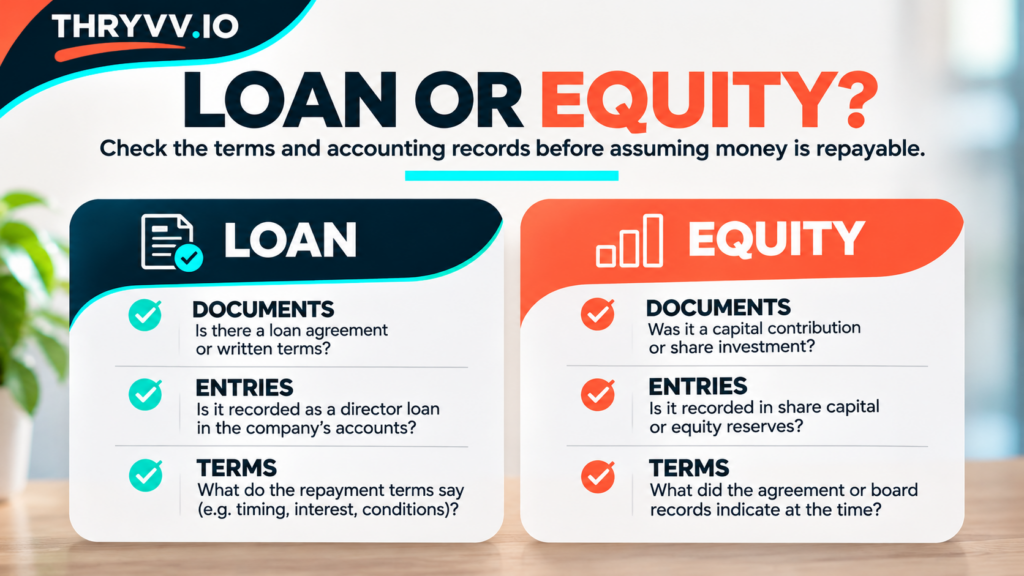
The practical question is not simply what the transaction was called, but what the available evidence establishes.
Can a Struggling Company Repay a Director Loan?
Even where a genuine loan exists, the company’s ability to repay it is a separate consideration.
A business might have sufficient cash to make a payment today while facing substantial obligations shortly afterwards. Payroll, tax liabilities, suppliers and other commitments must be considered alongside expected receipts and the reliability of cash-flow forecasts.
Directors also have responsibilities that extend beyond their personal financial interests. A proposed repayment to a director therefore warrants careful assessment, particularly where other creditors are already experiencing delays.
Through Thryvv’s Recover services, the starting point is understanding the financial pressure and the options available, rather than assuming a particular payment or restructuring decision is appropriate.
What Happens to Director Loans if the Company Becomes Insolvent?
If a company cannot meet its debts as they fall due, the position becomes more complex.
A director who has lent money may have a claim against the company, but recovery depends on the arrangement, available assets, other creditor claims and any applicable insolvency process.
Transactions involving directors can also receive particular scrutiny. The timing, purpose and circumstances of a proposed or completed repayment may matter, especially when the company’s financial position was deteriorating.
It would be misleading to assume that being a director gives a repayment claim priority. Equally, it would be premature to conclude that money advanced to the company can never be recovered.
Our earlier article on ASIC’s small business restructuring review provides further context about restructuring considerations for businesses under pressure. The appropriate pathway still depends on the company’s circumstances.
What Should Directors Check Before Seeking Repayment?
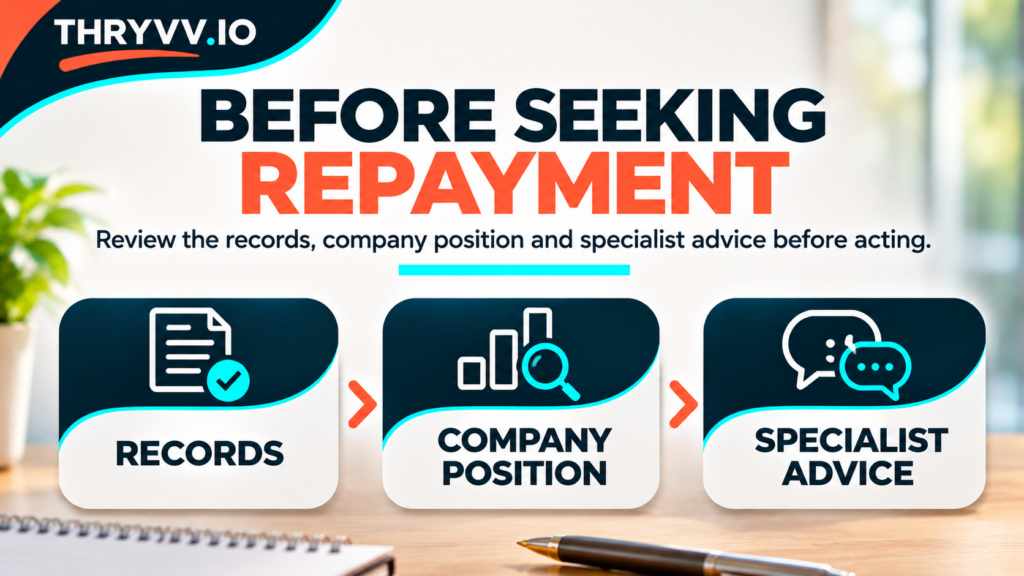
Before seeking repayment, it helps to establish both the nature of the original contribution and the company’s current financial position.
Which Records Should You Have Ready for a Review?
Start with the documents that explain why the money entered the company and how it was treated afterwards.
Relevant information may include:
- Original arrangements: Loan agreements, correspondence, board records and repayment terms.
- Transaction evidence: Bank transfers, dates, amounts and director loan account entries.
- Accounting treatment: Whether the contribution was recorded as debt, equity or another arrangement.
- Company obligations: Outstanding creditors, tax liabilities and upcoming payments.
- Financial outlook: Available cash, expected receipts and realistic forecasts.
These records do not automatically establish an entitlement to repayment. They provide a more reliable basis for discussing the legal, accounting and commercial questions.
When Is Specialist Advice Needed?
Professional advice becomes particularly important when the original funding arrangement is unclear, the company is struggling to meet obligations or repayment could affect other creditors.
Accounting, legal and tax considerations may overlap. A coordinated review can help clarify what the records support, what the company can reasonably afford and which issues require specialist attention before a decision is made.
What was your contribution recorded as, and what does the company’s current position allow?
If you have advanced personal funds to a struggling business, contact Thryvv for a confidential discussion about the records, financial pressures and questions worth examining before taking further action.
Need a clear next step?
If this sounds close to what is happening in your business, start with a confidential conversation. We’ll help you work out what matters first.
or call 07 2143 6020
Free. Confidential. No obligation.