
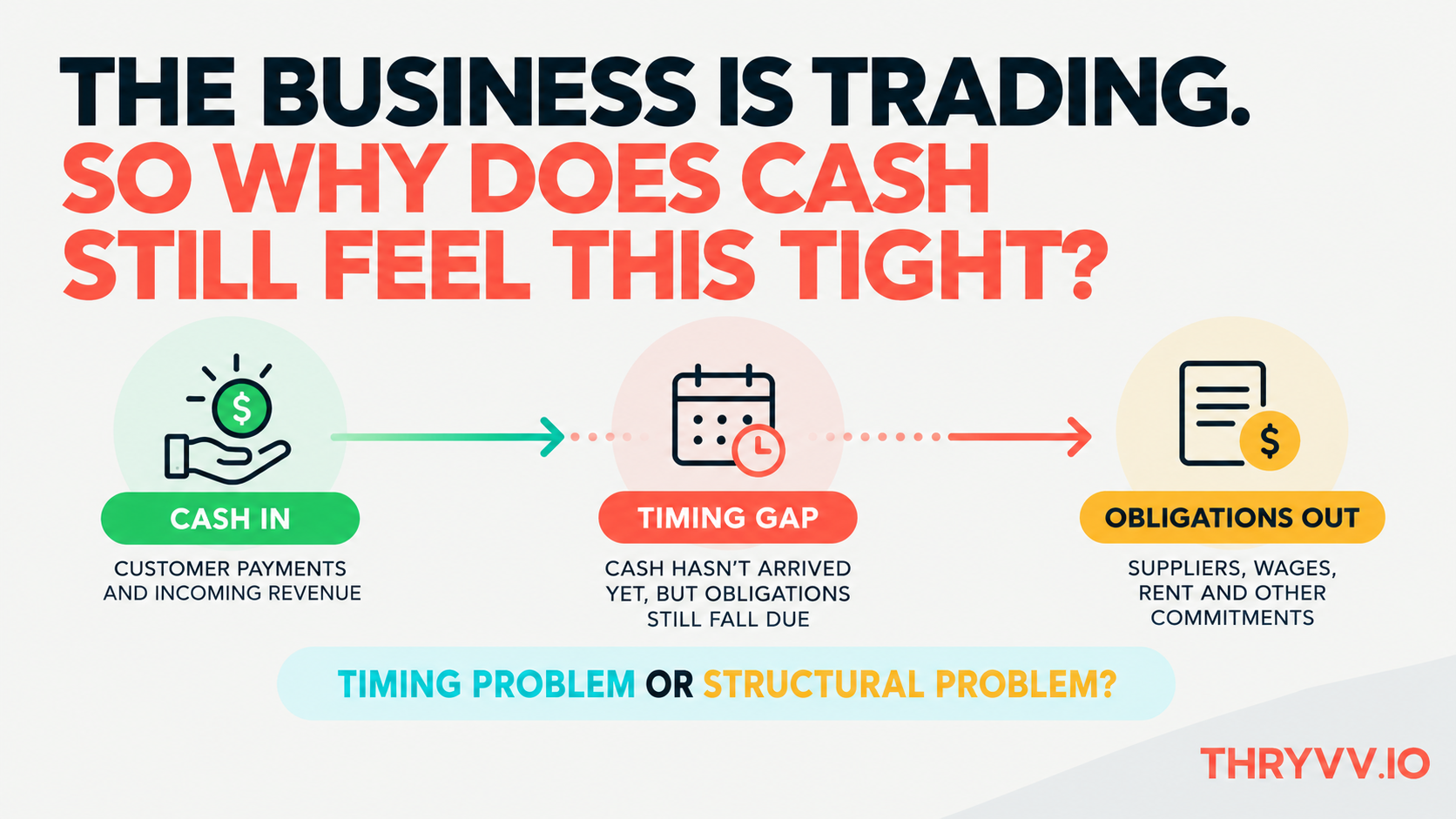
A business can be trading, generating revenue and maintaining a steady flow of work while still struggling to meet its financial commitments. From a director’s perspective, this can be frustrating because the business appears to be doing what it is supposed to do. Customers are coming through, work is being completed, and invoices are being issued. Yet the available cash never seems to be enough to cover everything falling due. When this continues, it becomes increasingly difficult to determine whether the business is experiencing temporary financial pressure or something more fundamental.
Working capital pressure can create that uncertainty. The immediate concern is usually the amount of cash available, but understanding the position requires a closer examination of how money moves through the business.
What Working Capital Pressure Looks Like Day to Day
Working capital refers to the difference between a business’s current assets and current liabilities. In everyday operations, pressure often becomes apparent when the timing of incoming payments does not align with the commitments the business needs to meet. A company may complete substantial work during the month but wait several weeks for customers to pay. During that period, wages, suppliers, rent and other operating expenses continue to fall due, leaving the director to manage commitments against cash that has not yet arrived.
This can gradually change how the business operates. Instead of making decisions based on commercial priorities, the director may find themselves concentrating on which payments can be made immediately and which need further negotiation. Even where sales remain healthy, repeated cash shortages can interfere with normal operations and make it harder to plan confidently. The important question is whether these shortages reflect the timing of cash movements or weaknesses in the underlying financial position.
A Cash Timing Problem Is Not Automatically a Business-Model Problem
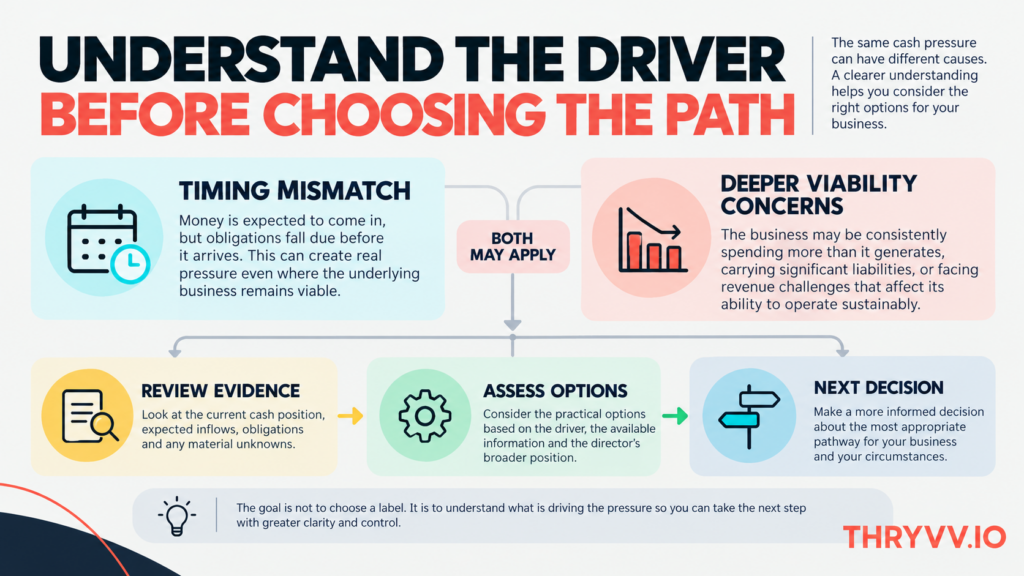
There are businesses where cash pressure is largely connected to the timing of receipts and payments. Customer invoices may be reliable, but the money arrives after significant operating commitments have already fallen due. Depending on the wider financial position, reviewing payment terms, funding arrangements and expenditure may help address the imbalance. However, the director still needs to understand whether expected receipts are sufficiently reliable and whether the business can continue meeting its obligations.
Other businesses may have deeper problems affecting their ability to operate sustainably. Costs may consistently exceed the income generated, existing liabilities may be too substantial, or future revenue may be insufficient to support ongoing commitments. These circumstances require a broader assessment because additional funding or extended payment terms may provide temporary relief without improving the underlying position. A business can also experience timing difficulties and structural weaknesses at the same time, which makes a proper financial assessment particularly important.
What Directors Need to See Before Deciding What the Pressure Means
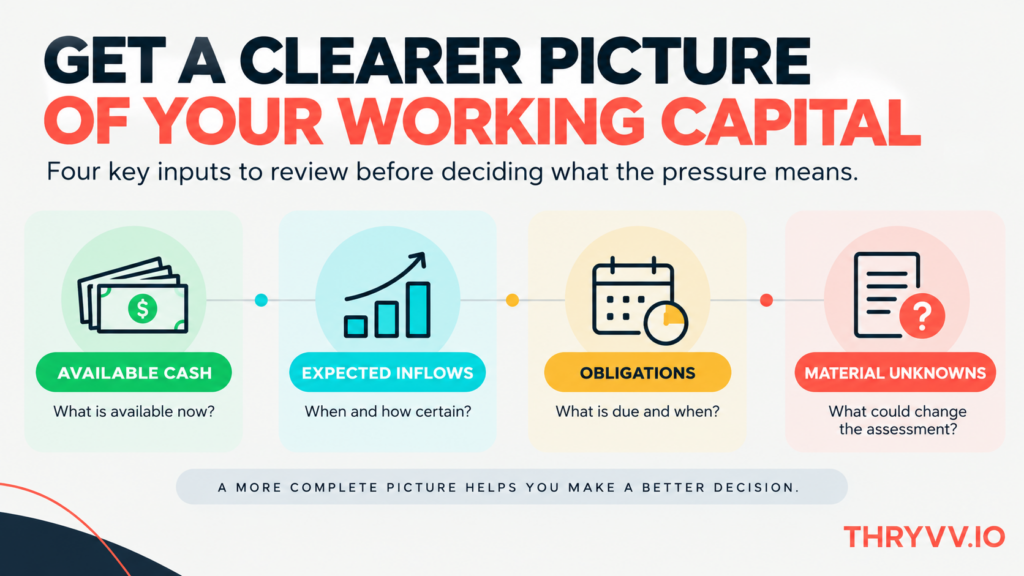
Before deciding what action is appropriate, directors need a practical understanding of the business’s immediate financial position. This does not necessarily mean waiting until every financial record has been completed or reconciled. It means identifying the information that will materially influence the next decision and checking whether the assumptions being made about future cash are realistic. A useful starting point is to examine four connected areas:
- Current cash: The funds available to meet immediate commitments.
- Expected inflows: Payments anticipated, their expected timing and the reliability of those receipts.
- Immediate obligations: Amounts falling due, existing commitments and upcoming operating requirements.
- Missing information: Financial details that could materially change the assessment.
Looking at these areas together provides a more useful picture than reviewing the bank balance in isolation. A substantial customer payment may appear to resolve the immediate shortage, but that depends on when the payment arrives and what other obligations must be met during the same period. Directors also need to consider whether the expected cash will genuinely improve the position or simply cover commitments that have already accumulated.
When the Working Capital Gap Starts Reducing Decision Room
Working capital pressure becomes more concerning when the business repeatedly depends on its next receipt to meet commitments that are already outstanding. Directors may respond by negotiating additional time with suppliers, reducing discretionary spending or considering further funding. These actions can be commercially appropriate, but their effectiveness depends on whether they contribute to a sustainable improvement. Without that assessment, the business may continue operating under the same pressure while its flexibility gradually reduces.
As the gap continues, relationships with suppliers and financiers may become more difficult to manage, particularly where payment arrangements are repeatedly revised. The director may also have fewer practical choices when an unexpected expense arises or an anticipated payment is delayed. This is why the purpose of buying additional time needs to be clear. Any short-term arrangement should be considered alongside the underlying financial position and the actions required to improve it.
Recovery Starts With Understanding the Driver, Not Choosing the Label
When financial pressure becomes persistent, directors may begin considering additional funding, restructuring or other recovery options. Each pathway has different commercial implications, and its suitability depends on the circumstances of the business. Where the underlying trading position is sustainable, attention may be directed towards payment cycles, working capital arrangements, operational costs and funding requirements. Where the business cannot realistically support its obligations, a more comprehensive assessment may be required to determine which recovery or exit pathways remain available.
The value of Thryvv.io’s Recover service is in helping directors understand their position before committing to a particular course of action. An effective recovery discussion should consider the causes of the pressure, the reliability of the available financial information and the consequences of different decisions. This provides a more considered basis for determining what the business may need and what the director should address first.
How a Director’s Advocate Can Help
A Director’s Advocate helps bring the relevant information and competing issues into a clearer picture so the director can make informed decisions. At Thryvv.io, this involves examining the financial position, identifying the factors contributing to the pressure and considering realistic options based on the circumstances. Where specialist legal, tax or insolvency advice is needed, we can also help coordinate the appropriate professional input so that decisions are considered in the context of the director’s wider position.
The presence of working capital pressure is a reason to examine the business carefully, particularly when shortages are becoming persistent. Understanding what is driving those shortages gives the director a stronger basis for assessing the available options and deciding what should happen next. If your business is experiencing this kind of pressure, talk to one of Thryvv.io’s Director’s Advocates and schedule a confidential strategy call to discuss your position.
Need a clear next step?
If this sounds close to what is happening in your business, start with a confidential conversation. We’ll help you work out what matters first.
or call 07 2143 6020
Free. Confidential. No obligation.